Showing posts with label China. Show all posts

Saturday, October 15, 2011

China goes shopping : How China invests its massive reserves!

               We now know from previous discussions that, China has built a massive war chest of foreign currency reserves in order to keep its currency pegged at an artificial low rate. For this, China absorbs the excess dollars in the system and prints Yuan to match that amount. So it keeps on accumulating dollars and over a decade China has accumulated the biggest dollar reserve equal to over $3 trillion and about 1/3 the total dollar reserves in the world! This is just staggering!!

                 Idle cash yields nothing! Its better invested. But this is no individual's money. This belongs to China and hence has to be invested in the safest asset available in the world. Until lately, US government bonds (Treasury bills, notes and bonds) were perceived to be the safest assets in the world. This is because it is believed that the US will always be able to repay any kind of loan it takes. This is called debt (http://en.wikipedia.org/wiki/Government_debt. Along with US, debt of countries like Germany, Japan, UK, France etc which are developed and have a sound economy are considered to be safer as well. Hence, China invested a major chunk of its reserves in US debt and a smaller part in these other countries.

              Today, China is the largest investor in US debt. This means that China is funding US state expenditures, war expenses, medicare, social security for which US borrows money. Let us analyze the chain reaction now.
(Read "->" as leading to)

                  China pegs currency artificially low -> China exports cheap goods -> China gets excess dollars->Prints yuan and absorbs excess dollars to maintain the currency peg -> Keeps accumulating US dollars in huge amounts (equivalent to trade surplus) -> Invests in US debt and lends money to US in huge amounts -> Large amount of cheap loan made available to US -> Borrowing cost for US remains very low-> Interest rate in US remains extremely low for an entire decade -> Cheap money causes US corporations and individuals to borrow more and buy more cheap Chinese goods -> AND THE CYCLE CONTINUES


The flow in the picture summarized the explanation above.


      Thus by selling more and more cheap goods China is actually encouraging the US to buy even more goods. The results have been extremely negative for US. Firstly, the direct effect was that the manufacturing base in US is almost eroded and it has caused lower GDP growth, unemployment etc. The indirect effect it that the Americans having access to cheap money have been borrowing more money than ever funded by China. Its a classics case of spending more than earning. 


     By putting some into play, we will get a direct idea of the consequences. The US debt has risen like an exponential graph and is nearing 100% of its GDP. 
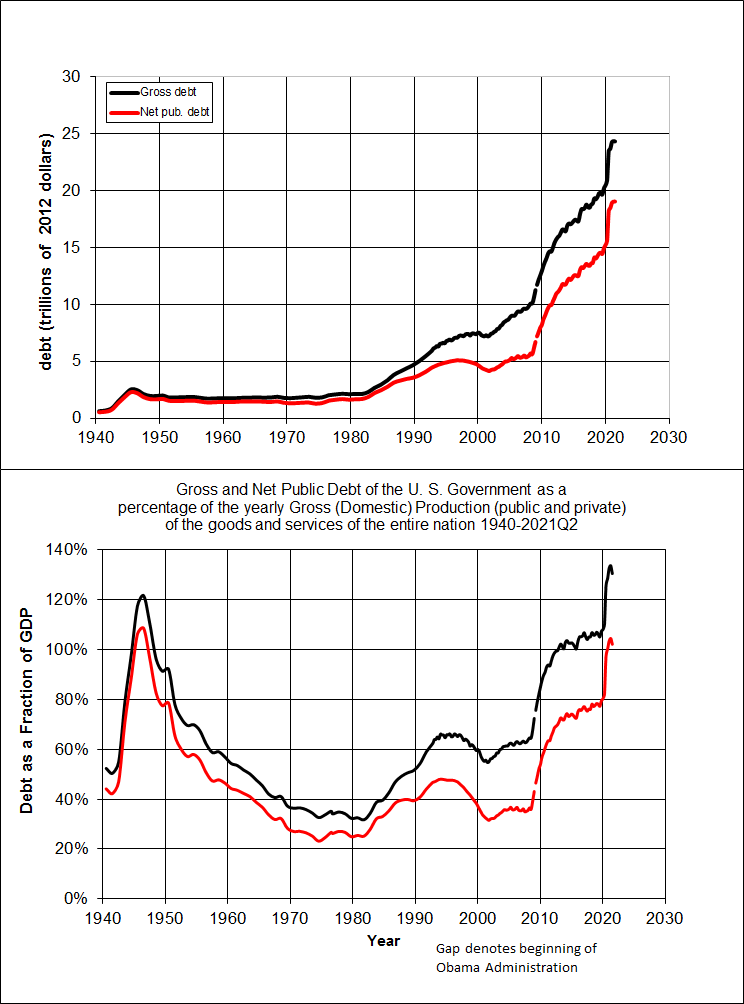

(Although not all of this rise can be attributed to this topic. US being involved in a decade long war in Afghanistan, Iraq along with 2008 crisis have significantly contributed to this rise in debt)

           At the same time the Chinese foreign reserves have increase in somewhat similar fashion. Can we relate the two graphs? One is where one party is going into huge debt and the other is building a huge reserve at the same time!! 

          Along with a huge store for shopping, US has found in China a banker who lends enormous amounts and makes borrowing cheaper for US. US is now addicted to this double cushion China is providing. Cheap    goods and easy money to buy them. US is getting extremely indebted and China is gaining doubly. 

  Imagine if China gets hesitant to lend money to US, who else is big enough to fund the US????

Check out this link http://www.defeatthedebt.com/

Tuesday, October 11, 2011

How China built its massive foreign reserve!

            Till now, we have established that with a very weak currency (artificially kept weak) the export industry of a country gets boost. China, in order to make itself an exports hub, artificially pegged the Yuan to US$ and maintained it for more than a decade. The manufacturing base started picking up steam and soon China started exporting billions of dollars worth of goods worldwide.

                Consider the following example. 

  1. 10 Yuan = 1US$ is the official peg that China wants to maintain.(for example).
  2. China produces and exports goods worth $10 Billion to US. Hence, China receives $10 Billion which it need to convert into Yuan ( $10 Billion = 100 Billion Yuan).
  3. US produces and exports goods and services worth $5 Billion to China. Hence, China pays 50 Billion Yuan which is converted into $5 Billion and paid to US.
                 
        China : Pays 50 Billion Yuan
                    Receives 10 Billion US$ (equivalent to 100 Billion Yuan)

            US: Pays 10 Billion US$
                   Receives 50 Billion Yuan ( equivalent to 5 Billion US$)

            Here, China need to convert 10 Billion US$ to 100 Billion Yuan to have domestic use. But it has 50 Billion Yuan only to pay to US. Thus there is only 50 Billon Yuan in the system but there is a demand for more 50 Billion Yuan to match the excess 5 billion US$ received. Hence, Yuan is in demand here as more US$ is available and it needs to be converted into Yuan. Ideally, Yuan should appreciate as it is more sought after.

           But the Chinese government has to maintain the peg constant and hence it needs to supply more Yuan without letting it appreciate. Hence, it simply prints more Yuan in exchange of US$. Hence, in this way, to supply Yuan, China prints 50 Billion Yuan and sucks up the additions US$ 5 Billion. The Yuan stays at the same peg due to this printing and remains artificially low, further assisting export industry in China.

           The Chinese reserve bank now has US$ 5 Billion as its reserve against which it simply printed 50 Billion Yuan. As the trade keeps increasing and Chinese exports keep growing, China prints more Yuan to match the excess US$ received. It sucks the US$ and prints Yuan and keeps accumulating foreign currency reserve base. 

           Currently China has the biggest and most massive foreign currency reserve to the tune of $ 3197 Billion as of June 2011. It must be remembered that, had China not adopted a fixed currency regime by pegging theYuan to USD, the trade imbalance in its favor would have helped Yuan to appreciate and hence there would have been no need to absorb US$ to print Yuan and hence there would never have been such a massive foreign currency reserve base. 

           What China does with its massive foreign reserve will be discussed in the next post.

Thursday, September 29, 2011

How currency rates affect the import/export and manufacturing industry of a country


                  Since the last half century, most of the international trade is done using USD as a standard currency. Consider the trade between US and China. US exports goods and services to China and gets USD in return. It does not have to convert it back to any other currency. But when China exports goods to US, it gets USD which it has to convert into Yuan to pay its workers, other expenses domestically.

                   Consider 2 scenarios.(Fictional values to provide case)

        A) 1US$ = 10 Yuan (Implies every $ earned by Chinese will fetch them 10 Yuan)
        B) 1US$ = 7 Yuan

               Clearly case B implies stronger Yuan compared to case A. What do the people of China prefer??

Importers pay Yuan to buy US$ and then buy goods internationally. Hence they would prefer paying lesser Yuan to get a dollar and hence prefer case B.

Exporters receive US$ and convert it to Yuan and pay their expense, purchase raw materials, services within China. They prefer getting more Yuan per US$ and hence prefer a weaker Yuan which is case A.

There is a conflict of interest between both these camps and the government has to decide which camp to favor in-order to develop its domestic manufacturing at the same time not costing too much on imports. Most countries allow free fluctuation of currency rates so the currency is decided by the quantum of exports and imports. But countries like China have a tightly controlled currency.

(Note: Renminbi is the official name for the currency, and yuan is the main unit of currency)

In the 1990s, China set upon the path of liberalization but did not have any significant manufacturing base as it has today. Their aim was to provide employment to its huge population and having a huge manufacturing infrastructure was the only way ahead. China already has cheap labor as its biggest asset. All it required was good governance and "Undervalued" Yuan. 
Historical USD/RMB(Yuan) chart

Around 1980, the exchange rate was 1.5 Yuan /US$ ( 0.66$/ Yuan as from chart). Slowly, China de-valued Yuan to 8.62 Yuan/ US$( 0.116 Yuan/ US$) in 1994 and maintained around about the same rate till 2005. This clearly shows the peg being maintained for more than a decade. It was during this decade that China built a massive manufacturing base and attracted foreign investments in manufacturing sector. 

Since the Yuan was heavily undervalued, every US$ gave more Yuan to Chinese exporters who could purchase cheaper labor and avail raw materials, other services at a very cheap rate hence enabling them to make extremely cheap goods and services.

These extremely cheap goods made the products from elsewhere around the world un-competitive and slowly started wiping off the manufacturing bases at many places. Eg USA, UK, France and other developed countries as they could not match the cheap labor, cheap currency and hence the cheap goods.

Even though cheap currency sparks inflation within the country the benefits of it were enormous to China as it catapulted China as a Giant Factory and simultaneously wiped off the competition elsewhere around the world. 

We will analyze the foreign currency reserve scenario and other side-effects in the next section.


Monday, September 26, 2011

US - China debt circle, international currency wars

                            Let us try to understand the vicious circle US and China are into currently and how the whole world is at a risk of a major upheaval in the near future. This topic will involve many jargons from the finance world and I will explain them as and when they appear.

The Background - Understanding how currency rates fluctuate daily (Know it? Skip it)

                            The number of factors that determine the currency rate is large and they vary from macro-economic factors like interest rate, fiscal deficit, overall debt of the nation etc to day to day factors like demand and supply. As a thumb rule, if there is a greater demand for a particular currency as compared to other, given limited supply, that currency appreciates versus other currencies and vice-versa. This is assuming the market is free from any regulatory restriction on currency rate. Examples of free flow/market based currencies are US Dollar, Euro, Japanese Yen etc. 


                            However, there are other kinds of currencies which have government/central bank as a regulator who restrict free fluctuation of the currency. This is done for various reasons like protecting export industries for example. Such currencies are pegged (fixed) against some reference currency or a basket of currencies and the fx rate is not allowed to fluctuate or limited (capped and floored) fluctuation is allowed. To maintain this constant rate, the central bank has to play an active role to buy/sell foreign currency and maintain the peg. Example of restricted currency is Chinese Yuan.It was pegged against the US$ and slow liberalization was allowed in the last decade due to international pressure. As uneven trade between two countries follows, it creates surplus for one currency and shortage for the other. At such times, restricted currency regimes need to intervene and ensure that the fx rate is at the pegged rate by buying/selling the currencies. 


This video from khanacademy.com is an excellent starting point.